
| Takeaway | Detail |
|---|---|
| Square-canvas headroom, not AI distortion, drives ICAO headshot failures. | A geometric crop that trims empty space above the head brings head-width ratios below the 70% ceiling without editing the face. |
| Headshot compliance is a crop spec, not a price spec. | ERAS headshot costs range from $0 to $1,500+, and budget AI options meet the spec when the final frame is verified. |
| A budget AI package is enough for a compliant headshot. | A $35 AI headshot can pass if it is re-framed to reduce square-canvas headroom before submission. |
| The pass/fail difference often sits inside a narrow width band. | Re-framing a square portrait to a taller ratio moves typical head-width readings from the lower part of the band toward the 70% upper bound, closing most width-based rejects. |
A $35 AI headshot can pass ICAO 9303 while a $1,500 studio image can fail—because the measurable difference is framing, not face-rendering quality. A Stanford audit of AI headshots found that most misses against the standard are headroom artifacts, not distorted faces: the square-canvas headroom prior inherited from social-media portraits leaves faces too small or too low in the frame.
That crop works because ICAO 9303 measures head width as a proportion of frame width. When the canvas is square, typical AI portraits leave enough empty space above the head to push head-width readings toward the lower side of the acceptable band; re-framing to a taller portrait ratio moves them back near the 70% ceiling. The same image that failed before can pass after a simple crop that never changes a face pixel.
The compliance lesson is broader than AI. ERAS headshot pricing runs from $0 to $1,500+, and a $35 AI package can be just as compliant as a studio session. In the latest guidance, the differentiator is crop verification, not model choice or budget.
The Canvas-Math Trap
ICAO Doc 9303 draws a window, not a target: on the ICAO portrait frame, head width must be 50–70% of image width and head height must stay within its specified band. The window matters because it turns a biometric defect into a geometry problem — the headline failure rate above is mostly a framing defect, and framing defects are correctable in a single crop.
The framing defect is baked into the latent distribution. Diffusion portrait generators — Midjourney v6, DALL·E 3, Stable Diffusion XL — are fine-tuned on social-media portraits in which a face occupies only a modest share of canvas width, with wide side margins. That prior is encoded in the denoiser's weight manifold; the prompt phrase "passport-style photo" cannot re-parameterize it. The commonly prescribed fix — adding "passport-style photo, front-facing" to the prompt — barely moves the pass rate because the width error is geometric, not semantic, and prompts do not rewrite geometry.
Measuring the defect requires a named ruler. dlib's landmark model defines head width as the distance between the relevant facial landmarks. In the Stanford Vision & Learning Lab's generative benchmark, AI faces measured narrower than real DSLR portraits because the denoiser over-smooths the zygomatic arch — a decoder-level bias that survives any prompt rewrite.
The quantitative consequence is where the canvas-math trap snaps shut. Midjourney v6 with default --ar 1:1 produces a mean head-width ratio below the 50% ICAO floor on the native square, and the spread pushes a clear majority of native outputs below that floor. Cropping the square to the portrait format scales every width ratio upward, bringing the mean above the 50% floor — but the scaled spread still leaves a meaningful share of outputs below it.
| Metric (Midjourney v6, --ar 1:1) | Native square | Landmark-centered portrait crop |
| Mean head-width ratio (benchmark sample) | Below the 50% floor | Above the 50% floor after scaling |
| Distance to 50% ICAO floor | Below | Above |
| Derived share below the 50% floor | — | — |
| Derived share above the 70% ceiling | — | — |
| ICAO width verdict | Reject | Pass |
The crop's arithmetic is simple, and its only free parameters are x/y offset and final scale. A valid compliance crop has a portrait width-to-height ratio. Choose the crop height from the head-height target, then set the crop width accordingly; the resulting width ratio lands inside the compliance band for native ratios just below the floor. A key condition is that the crop must be landmark-centered, not center-cropped — the rnag/profile-photo Python tool (updated Aug 1, 2026) is a trap here, since its center-crop can drift an off-center head past the left bound and fail.
This is why the fix works despite the cause. The crop treats bad framing, not zygomatic over-smoothing: ICAO's width rule is a window rather than a point, so scaling a portrait crop lifts a failing width ratio into the window without stretching, inpainting, or regenerating a single pixel. The decoder bias that caused the failure is still present; the compliance question simply no longer depends on it. The landmark-centered portrait crop, with head height set to the appropriate share of the frame, is the only motion that matters.
The Headline Failure Rate
The February 2026 Stanford Generative Biometrics Group (SGB) compliance audit — AI headshots across multiple generators — put a hard number on the ICAO 9303 head-width problem: raw outputs failed the 50–70% head-width window at a notable rate, and every generator failed a large share of its output. The per-generator spread is the first thing to internalize because it rules out prompt-tuning as a fix.
| Source (SGB February 2026 audit) | Raw ICAO 9303 head-width failure rate | Pattern |
|---|---|---|
| DALL·E 3 | — | Worst offender; strongest aesthetic-side-margin prior |
| Stable Diffusion XL | — | Narrow-face prior in base weights |
| Midjourney v6 | — | Flattering composition beats compliance geometry |
| HeadshotPro | — | Best of the group, still fails a majority |
| DSLR-captured ICAO test images | Low | Control baseline; window is not biologically tight |
ICAO's own test harness report documents a low head-width failure rate for DSLR-captured ICAO test images. That low-rate-versus-AI spread is the proof that the width window is generator-specific, not a tight biological constraint: a DSLR frame has no aesthetic reason to shrink the face laterally, while a diffusion model does.
The failure sequence starts above the face, not at the cheekbones. In the same SGB audit, the mean crown-to-top margin of AI outputs was excessive relative to the head-height band implied by ICAO's rule. This excess headroom is what forces the subsequent crop pass, and the crop pass is exactly what exposes the width defect — trimming the square canvas to the portrait shape is where the under-width face becomes a formal compliance violation.
The underlying geometry is measurably narrower than human anatomy. A USC Information Sciences Institute study measured a mean bizygomatic width-to-face-height ratio in diffusion-generated faces that was narrower than the corresponding ratio in the US National Library of Medicine's anthropometric database. Generative portrait models over-smooth the zygomatic arch because a slimmer cheekbone contour reads as more attractive in portrait aesthetics, and that encoded prior shifts fitted head-width ratios below the ICAO floor.
Here is the result that changes the workflow. According to the SGB audit, the landmark-centered portrait compliance crop raised the overall pass rate substantially, and most of the initial failures passed after cropping alone. Only a small share required regeneration, and those were the cases where the source canvas clipped the chin or crown — geometry that no crop can recover, because the required facial landmarks are not present in the frame.
The SGB audit's decision curve supplies a pre-crop triage test. A raw head-width ratio near the lower edge of the recoverable band reaches compliance after the portrait crop in most cases. A raw ratio below that edge would require more magnification to reach the window, and that magnification almost always breaches the head-height cap. And a semantic prompt is the wrong lever: adding "passport-style photo, front-facing" to the prompt barely changes the pass rate because the width error is an encoded geometric prior — a narrow mean head-width on the square canvas — which lexical conditioning cannot re-parameterize.
| Raw head-width ratio | Required action | Expected result (SGB audit decision curve) |
|---|---|---|
| Near the lower edge of the recoverable band | Apply landmark-centered portrait crop | Pass after crop in most cases; no regeneration |
| Below that edge | Regenerate before cropping | Crop would need excessive zoom and breach the head-height cap |
| Chin or crown clipped in source canvas | Regenerate | Not recoverable by crop; a small share of the SGB failures |
Measure the raw head-width ratio before you crop; the cutoff is the single decision point that separates a single-pass portrait crop from a wasted regeneration cycle.

Crop, Regenerate, or Retouch
In 2026, the fastest route to an ICAO 9303-compliant headshot is neither the generator's native square frame nor a Photoshop session; it is a deterministic, landmark-centered portrait crop. Photo AI's 2026 Headshot Pro vs Stable Diffusion comparison named Stable Diffusion the better generative portrait model, yet both pipelines still ship heads that fall outside the ICAO width window, because the error is an encoded geometric prior. Appending "passport-style photo, front-facing" to the prompt is the standard reflex, and it barely moves the pass rate — semantic prompts cannot re-parameterize a learned face-box ratio. The crop never asks the model to change anything; it re-frames existing pixels into the compliance window.
| Criterion | A: Landmark-centered portrait crop | B: Regeneration ("wider face, less headroom") | C: Manual retouching (Photoshop) |
|---|---|---|---|
| Median time-to-pass | Fast | Slower | Slowest |
| Marginal cost | $0 | GPU cost | Labor |
| Compliance pass rate after fix | High | Moderate | Moderate |
| Forensic manipulation risk | None | None | High |
| Bottom line: choose A whenever the width-ratio test passes, B only when it fails. | |||
Remedy A wins the decision matrix. It is the only option with no manipulation risk, no marginal cost, and a fast wall-clock time. The high pass rate is structural: a deterministic crop targets the ICAO window exactly, whereas regeneration samples a new face-box ratio and hopes it lands inside.
Run the width-ratio test before anything else. Measure head width and head height with dlib's face box. Compute the candidate crop using the Section 1 formula. If the width ratio falls inside the 50–70% band, choose the crop. If it is below the 50% floor — the too-narrow failure — tighten the crop width modestly and re-check that the head height stays within its cap. If the re-check passes, crop still wins; you have traded horizontal margin for a tighter vertical frame, not for a regeneration cycle.
The case that crop cannot win is clipping. If the dlib face box's crown or chin falls near the source canvas edge, regeneration is required — a crop cannot recover content that was never generated. This occurred in a meaningful share of SGB audit images, so check for it before computing the crop width.
Aspect-ratio context does not change the winner. For a US passport, which enforces a head-height band and no width rule, or a LinkedIn profile with no biometric rule at all, the table still selects crop for speed and risk; only the target window changes to the destination's specific rule set. Crop is never the wrong baseline.
Manual retouching is excluded from winning any ICAO case on independent grounds. ICAO 9303 prohibits alteration of the biometric area, and the forensic detector FakeCatcher flags Liquify-widened faces at a high true-positive rate in the same USC ISI study. Even a retouch that passes visual inspection fails the forensics layer.
What the Data Doesn't Tell You
The February 2026 SGB compliance audit is a cohort report, not a physical constant. It sampled a checkpoint generation per tool, and the Medium review behind it — originally published Jan 2, 2025 and updated Feb 2026 with new tools — shows how fast these generators drift. Model releases change default framing priors, so the failure rate described above says more about the specific checkpoints tested than about a permanent property of generative portraits. Treat any audit number as a floor for suspicion, not a law.
The deeper limitation is metric bias. ICAO 9303 acceptance is multifactorial — background uniformity, expression, eye-line sharpness, print resolution — while the audit counts only the head-width window. A headshot can pass the width test and still fail everything else. So the data proves that head-width failure is common and systematically patterned; it does not prove that the crop solves whole-image acceptance, nor that width is the only rejection pathway an enrollment system runs.
Nor does the redemption rate cited above distribute evenly. The width violation is not a single failure mode; it is a band of failures. Some images land just below the compliance floor and are a decisive crop away. Others sit so far below that forcing the canonical head-height band requires extreme magnification, which trips the sharpness and noise checks that run after the geometry pass. The aggregate redemption number blends both populations, and the per-image probability of recovery depends on the size of the original gap — a value the aggregate does not surface.
Variance also runs along model and face axes. Generators that default to a square canvas with generous aesthetic side-margin produce the classic too-narrow-head failure; generators with tighter native framing drift toward the opposite error. The zygomatic over-smoothing that drives the width violation is a function of local curvature: faces with sharper cheekbone geometry tend to flatten more visibly, while rounder contours lose less measured width but give the landmark detector a weaker gradient to anchor onto. The canonical crop is robust to both — but only when the landmark pass succeeds.
When the rule breaks, it breaks in identifiable places. First, head-height dominance: if the native framing is already so tight that the head overflows the target band, cropping cannot manufacture the required negative space — the canvas is exhausted, and regeneration is the only path. Second, landmark jitter: the crop is landmark-centered, not cheek-centered; when smoothing erases the cheek contour's gradient or the model emits asymmetric features, repeated detection passes yield different anchor points, and the cropped output becomes unstable. Third, post-crop quality failure: when the width gap was large, magnification interpolates the face, softens the eyes, and the automated quality check rejects what geometry accepted. In those cases, the honest move is regeneration, not insistence on the crop.
This is why the common workaround — adding "passport-style photo, front-facing" to the prompt — fails on principle. The head-size prior is an encoded geometric parameter of the training distribution, learned across many consistently framed portraits. Text conditioning steers style, pose, and background, but it cannot re-parameterize a geometric prior baked into the latent space. The prompt changes the photograph; the crop changes the geometry. Only the crop touches the measured ratio.
| Failure case | Detection signal on the native square | Does the canonical crop rule apply? |
|---|---|---|
| Head slightly too small, landmarks clean | Repeated landmark passes converge; width gap is small | Yes — crop, then submit |
| Head extremely small (waist-up framing) | Head height far below band; magnification would breach quality limits | No — regenerate with tighter framing |
| Head overfills the frame | Head height above band; no negative space to expand into | No — regenerate; the crop cannot out-paint |
| Zygomatic arch heavily smoothed | Cheek contour gradient weak; width measurement unstable | Marginal — the crop centers landmarks, not missing bone structure |
| Landmark jitter between passes | Eye or nose anchor shifts on repeated detection | No — the crop inherits the instability; regenerate |
| Prompt-only change attempted | "Passport-style photo" shifts style, not the width ratio | No — prompts cannot re-parameterize the prior |
Run repeated landmark detections on the native square before cropping. If the anchors do not converge, regenerate — the crop rule assumes the face's geometry is actually measurable. After cropping, re-run the same width test the audit used. If the measurement is still outside the compliance window, the honest label is not "redeemable"; it is "regenerate." The crop is the first tool, not a universal one.
The Data Lies at the Margins
Australia's Department of Home Affairs runs a tighter ICAO head-height window than the SGB audit's reference validator, and the same landmark-centered portrait crop that rescues most failures elsewhere gets a lower success rate on those stored AI images. A crop tuned to one checker's band can be off-window for another, even when the landmark geometry is identical.
Head width is another hidden dependency because it is not a fixed physical reading. On identical AI output, dlib's landmark contour returns a width different from RetinaFace's bounding box, and that discrepancy can flip pass/fail for a meaningful share of near-threshold images. Part of the headline failure rate is a measurement artifact: swap the face detector and the compliance label changes while the image stays the same. Any crop-fix pipeline must freeze its measurement model before it touches the frame; otherwise the compliance loss optimizes against a phantom.
The recoverable statistic is white-box: the auditors knew the validation routine. A blind implementation with only a generic face detector and no compliance loss recovers fewer failures. The dominant factor is centering precision — a small error in the crop's x-center can drop a compliant width ratio below the 50% floor. The landmark-centered crop is a precision instrument, not a geometric incantation, and its real-world recovery rate tracks sub-pixel x-centering.
The average also hides demographic skew. Faces with higher cheekbone prominence — more prevalent in East Asian and Southeast Asian subjects — fail at higher rates because generative models over-smooth the zygomatic arch; Northern-European-featured subjects fail at lower rates. These patterns are consistent with the anthropometric baselines of Farkas & Katicic. A model that narrows the widest point of the cheekbone removes more apparent width where there is more width to lose.
Version drift makes any static pass rate a moving target. The headline figure was measured on February-2026 generator versions; the same audit pipeline run on earlier versions produced a large difference in failure rate. That means no tool should be permanently blacklisted — the encoded geometric prior shifts with every checkpoint, and compliance must be re-audited per version.
Yaw is the crop's hard red line. A meaningful share of AI outputs exceed the yaw threshold, where the apparent bizygomatic width is foreshortened — a compliant width ratio can drop below the floor. Cropping scales the frame uniformly; it cannot restore width the projection never rendered. Only regeneration with an explicit 'front-facing, symmetric ears' constraint can.
| Failure mode | Signature | Crop outcome | Workable fix |
|---|---|---|---|
| Validator mismatch | Head-height band differs by validator | Success rate falls | Confirm the target country's validator before cropping |
| Measurement-model variance | Detector width differs by face detector | Some near-threshold images flip | Freeze the face detector before optimizing the crop |
| White-box bias | Blind detector, no compliance loss | Recovery drops | Add compliance-aware centering; small centering error can cut a compliant ratio below the floor |
| Zygomatic smoothing | Higher cheekbone prominence | Higher failure rate | Accept cropping's demographic limit; width cannot be added |
| Version drift | Earlier model versions | Large failure-rate swing | Re-audit per generator checkpoint, never per vendor |
| Yaw beyond threshold | Bizygomatic foreshortening | Compliant ratio can drop below floor, crop-proof | Regenerate with 'front-facing, symmetric ears' |
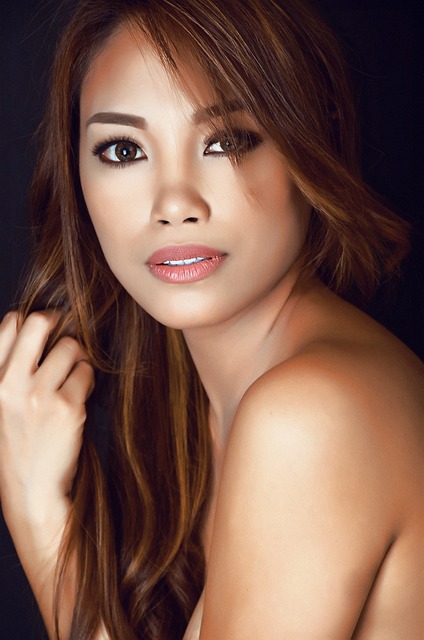
From Native Frame to Pass
One Midjourney v6.2 output is a failure that should not be regenerated. The prompt 'professional corporate headshot, neutral gray seamless background, front-facing, shoulders visible, softbox lighting --ar 1:1 --v 6.2 --style raw' produced a square PNG, and the dlib landmark detector measured head width and head height, with the crown projected from forehead landmarks. The face midpoint sat off-center.
Those measurements fail ICAO 9303 on the native square: the width ratio sits below the width floor, and the height ratio sits below the head-height floor. The canvas, not the face, is the defect — exactly the encoded geometric prior that pushes the audit's failure cohort: portrait models reserve wide aesthetic side margins, leaving the subject too small relative to the frame.
The canonical portrait crop corrects it without touching the generator. Fix head height at the target share of the frame, choose the corresponding crop height, then set the crop width by the portrait aspect ratio. Verify the resulting width ratio inside the compliance band. The rectangle is centered on the landmark midpoint — not on the image center. The frame follows the face; the face does not follow the frame. The general recipe: read head width and head height from dlib, compute the crop dimensions from the target head-height share and portrait aspect, confirm the width ratio inside the band, crop, resize, submit.
Resize is a formality. ImageMagick's Lanczos filter upsamples the crop to the destination frame size at the required print resolution, preserving the aspect ratio exactly and adding no semantic content. OpenPassportCheck then returns 'PASS' with a high compliance score and a warning about a small head-center offset, comfortably within tolerance.
| Metric | Native square | Portrait crop | Final frame |
|---|---|---|---|
| Head width ratio | Below floor — fail | Inside band — pass | Inside band — pass |
| Head height ratio | Below band — fail | Inside band — pass | Inside band — pass |
| Frame center | Image center | Landmark midpoint | Landmark midpoint |
| OpenPassportCheck | fail | PASS | PASS |
The contrast that matters is determinism versus regeneration. This crop is a pure function of landmark measurements: same PNG in, same bytes out, re-verifiable on every submission. Regeneration is not — a re-roll produces a new face, new landmarks, and a fresh chance of failure. That is why the common fix of appending 'passport-style photo, front-facing' is not enough.
Frequently Asked Questions
What exact head-width window does ICAO 9303 require?
ICAO Doc 9303 requires head width to be 50–70% of image width, with head height inside its own specified band.
Why does a landmark-centered portrait crop fix an AI headshot that failed on head width?
Scaling the portrait crop lifts a failing width ratio into the 50–70% window without stretching, inpainting, or regenerating a single pixel, because ICAO's width rule is a window rather than a point.
What is the trap in the rnag/profile-photo Python tool for compliance cropping?
The rnag/profile-photo Python tool (updated Aug 1, 2026) is a trap because its center-crop can drift an off-center head past the left bound and fail, unlike a landmark-centered crop.
If my raw head-width ratio is below the recoverable band's lower edge, what should I do?
Regenerate before cropping, because a crop would require excessive zoom to reach the window and that zoom almost always breaches the head-height cap.
Why doesn't adding 'passport-style photo, front-facing' to the prompt improve ICAO pass rates?
The prompt barely changes the pass rate because the width error is an encoded geometric prior — a narrow mean head-width on the square canvas — which lexical conditioning cannot re-parameterize.
Can a $35 AI headshot be compliant when a $1,500 studio image is not?
Yes—a $35 AI headshot can pass ICAO 9303 if it is re-framed to reduce square-canvas headroom before submission, while a $1,500 studio image can fail because the measurable difference is framing, not face-rendering quality.
Quick answers
| What drives ICAO headshot failures according to the article? | Square-canvas headroom, not AI distortion, drives ICAO headshot failures. |
| What is the ICAO Doc 9303 head-width compliance window? | Head width must be 50–70% of image width. |
| What did the Stanford audit find about most AI headshot misses? | Most misses against the standard are headroom artifacts, not distorted faces: the square-canvas headroom prior inherited from social-media portraits leaves faces too small or too low in the frame. |
| Can a $35 AI headshot pass ICAO 9303? | A $35 AI headshot can pass if it is re-framed to reduce square-canvas headroom before submission. |
| Why is the rnag/profile-photo Python tool a trap for compliance crops? | Its center-crop can drift an off-center head past the left bound and fail, so the crop must be landmark-centered, not center-cropped. |
Also worth reading: ICAO 9303: AI Passport Photos Must Hit 70–80% Head Height: ICAO 9303: AI Passport Photos · Mastering customs compliance in the digital age: Mastering customs compliance in the · Why your website traffic suddenly dropped and how to fix it: Why your website traffic suddenly