
TAAFI and CASO announced a 2018 animation/VFX job fair. This guide delivers a verify-before-you-commit method: confirm the live, complete option and compare like-for-like totals and terms.
How It Works
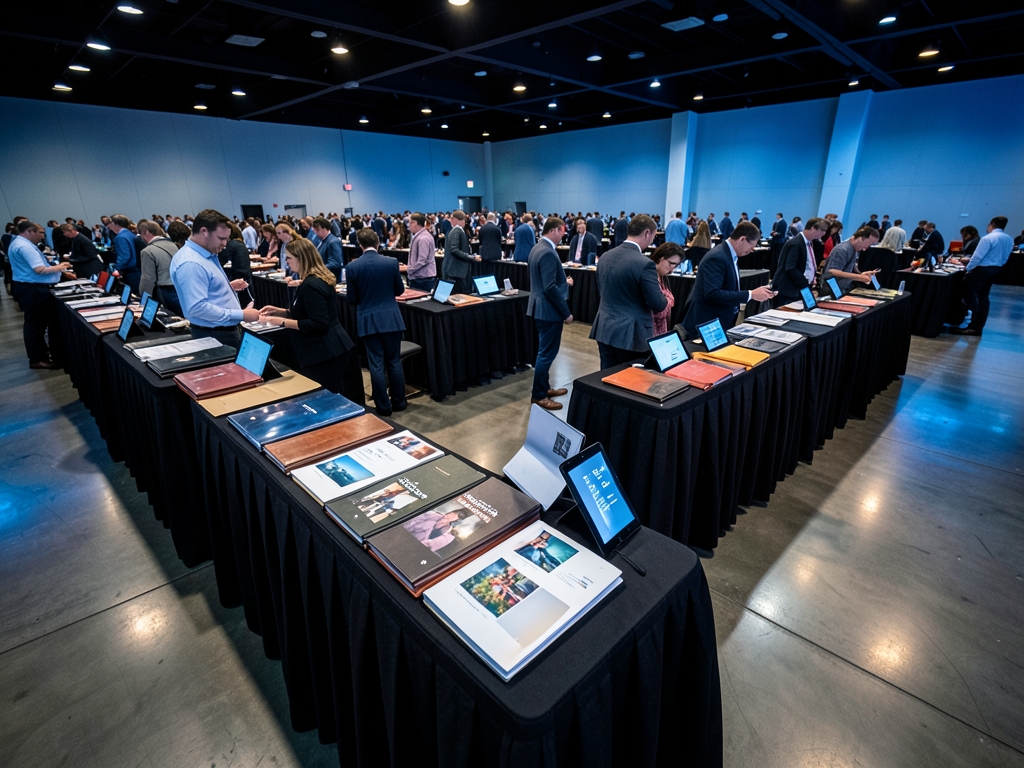
An animation and VFX job fair operates as a structured meeting point between studios seeking talent and artists seeking work. The mechanism is straightforward: studios reserve booths or tables at a venue, recruiters staff those stations, and attendees circulate with physical or digital copies of their demo reels and portfolios. At events like TAAFI and CASO, the flow typically moves from check-in through a floor where you approach booths directly, present your work, and exchange contact information. Understanding this mechanism matters because it shapes every decision you make before you commit time or money to attending.
The key terms you need to know are simple but essential. A booth is the physical or virtual station a studio occupies. A portfolio review is a structured session where a recruiter examines your work and gives feedback. A demo reel is your edited compilation of best work, usually kept short. A recruiter is the studio representative conducting reviews and collecting materials. A call-back or second-round interview is the follow-up step after an initial positive interaction. Knowing these terms lets you read event descriptions accurately and avoid confusing a general admission ticket with a reserved review slot.
The verify-before-you-commit mechanism works in three steps. First, locate the live event page or registration portal and confirm the event is still scheduled as announced. Second, pull the complete list of participating studios and compare it against the list you saw in the original announcement—studies like those from Animation Ireland and industry bodies such as the Visual Effects Society show that rosters change between announcement and event date. Third, check whether the terms you are committing to—such as what your ticket includes, whether portfolio reviews require separate sign-up, and what format your demo reel must be in—match what is stated on the live page rather than what you recall from the initial announcement.
Comparing like-for-like totals means looking at the same categories across options. If one event lists a general admission price and another lists a price that includes a portfolio review session, those are not the same product. Break each option into its components: entry cost, review access, workshop access, and any materials fee. Only then can you compare totals meaningfully. The rule is simple: compare the sum of what you actually receive, not the headline number alone.
The mechanism also includes a timing element. Registration windows, early-bird deadlines, and booth assignment cutoffs all affect what you get for what you pay. Verify each date on the live page before committing, because announced dates can shift. The check is always the same: open the live source, read the current terms, and confirm that the option you are about to commit to is the complete, current version—not a cached memory of the original announcement.

Common Mistakes
The first mistake is treating a fair listing as a live, complete offer. A booth number on a floor plan, a studio name on a sponsor banner, or a recruiter's post about attending tells you a company reserved space — not that the roles you want are still open, that the recruiters reviewing your reel are the ones hiring for your discipline, or that the fair's own schedule has not shifted since the page was published. Cinesite, for example, has promoted its presence at events like SPARK ANIMATION while separately announcing equity and hiring initiatives, and those two facts can circulate months apart. Before you commit a day, a portfolio print run, or a train ticket, verify three things on the fair's own site: the current exhibitor list with booth assignments, the posted hours for the day you plan to attend, and whether any studios have withdrawn or been added since the last update. If the page still shows last year's date or a "coming soon" exhibitor grid, treat the listing as unconfirmed.
The second mistake is comparing headline numbers instead of like-for-like totals and terms. Two studios can both advertise "portfolio reviews," but one may cap reviews at a fixed number per day while the other runs an open queue; one may accept digital reels on a tablet at the booth, the other may require a printed leave-behind. Those differences change what you actually get for your time. Build a simple comparison before the fair:
| Check | What to verify | Why it matters |
|---|---|---|
| Review format | Open queue vs. scheduled slots; digital vs. print submission | Determines whether you can see every target studio or only a few |
| Recruiter role | Whether the person at the booth hires for your discipline or only collects resumes | A generalist recruiter cannot evaluate a rigging or FX reel |
| Follow-up terms | What the studio says happens after the fair — portal upload, email, or nothing | An unclear follow-up path means your materials may never reach a hiring manager |
Apply the same discipline to the fair's own terms. If the organizer charges for portfolio reviews, lists a separate fee for recruiter access, or requires pre-registration for specific studios, those conditions belong in your comparison — a free general admission badge does not mean every booth is open to you. Where the fair publishes no figure for a fee or a review cap, do not assume one; instead, email the organizer and the studio directly and ask. A written answer you can quote beats a guess.
Finally, do not let a single strong booth erase a weak total. If four of your six target studios have confirmed current openings and two have not posted anything since the previous cycle, your realistic plan should reflect that split rather than the fair's overall size. Verify each studio's live postings on its own careers page the week of the event, note the date you checked, and rank your stops by confirmed openings first. That is the difference between attending a fair and actually committing to the right rooms.

Insider Tactics
At a TAAFI and CASO job fair, the sharper tactic is to pitch in the studio's own vocabulary. Animation Mentor's Animworks session notes that animation workflows differ across VFX, commercials, animated features, game cinematics, and games, and that a portfolio has to be tailored for each. Many attendees hand the same reel to every booth. Carry sector-specific cuts — creature and effects work for VFX houses, character performance for feature and game cinematics — and the recruiter can picture you in a specific seat instead of a generic one. Before you rely on any of this, confirm the live, complete option on the official TAAFI and CASO pages: date, venue, exhibitors, and costs.
Ask about the next slate, not the posted opening. Animation events are where studios preview work in progress; Cinesite's SPARK ANIMATION 2026 listing, for instance, pairs its presence with a making-of session on RAY GUNN. So "what are you staffing next, and which department owns it?" tends to draw a more candid answer than "are you hiring?" Once a lead names the department, ask who reviews reels for it and what the next step is. A name and a defined next step beat a promise to keep in touch. Treat any such answer as a check to confirm on the studio's own live careers page, not as a confirmed opening.
Do the paperwork before the conversation. Load your application into the studio's careers portal ahead of the fair so the booth talk can end with "search my name" rather than "email me a link." Check tool compatibility as well: Maxon's own product framing covers Cinema 4D, Red Giant, and Redshift, and Autodesk used SIGGRAPH to announce new animation and VFX workflow tools, as Animation Magazine covered. Ask which version the team runs and whether it wants native project files or rendered output, then prepare whichever it names. Confirm the live, complete option — date, venue, exhibitors, and costs — on the official TAAFI and CASO pages before you commit.
| Question to ask | What it reveals | Action it triggers |
|---|---|---|
| Which show are you staffing next, and which department owns it? | Whether the need is live and where it sits in the pipeline | Recut your reel breakdown around that department's work |
| Which tool versions does the team run? | Whether your files and renders will be usable | Deliver native files or rendered output, whichever they accept |
| Who reviews reels for this department, and what is the next step? | The actual decision path | Address the follow-up to that person and name the step |
Timing matters more than most attendees assume. Queue lengths rise and fall through the day, so ask the recruiter at the booth when the floor quiets down, then return in that window with your condensed pitch ready. Spend the earliest minutes collecting schedules and requirements instead of delivering your best pitch — you present far better once you know which departments are genuinely staffing. Verify the live, complete option before committing: an announcement alone is not the live option.
Follow up while your conversation is still the recruiter's most recent contact from that booth, and reference the specific department and project you discussed; a generic note competes with everyone else's. If the studio is not ready to move, ask when to check back and what would make you a stronger candidate by then — then close that gap before the next cycle rather than waiting for the next fair. Compare like-for-like totals and terms across the TAAFI and CASO options before deciding.

Comparison
Build the comparison as a two-column ledger, not a narrative. Put the archived TAAFI/CASO announcement in the left column and the live listings you can still reach in the right column. Every row must use the same unit on both sides: role title against role title, application deadline against application deadline, required portfolio format against required portfolio format, contact point against contact point. If the left column says only that a studio took part while the right column names a specific open position, that is not a matched row. Log it as a blank rather than scoring it.
| Row to compare | Archived announcement | Live cross-verified listing |
|---|---|---|
| Role title | Often absent; studio named only | Named position with discipline |
| Terms (seniority, format, location) | Rarely stated | Stated on the studio page |
| Application route | Attendance at the event | Named portal, email, or booth |
| Contact | Organizer or press contact | Recruiter or hiring contact |
| Current validity | Historical record | Checkable today |
| Usable for commitment? | No | Yes, when both sources match |
The archived announcement wins mainly when you need a historical record. Animation Magazine's coverage of the Visual Effects Society's awards category updates is a useful model: trade press documents what a program covered in a given year, and that record remains accurate as history even after the program changes. If your goal is to learn which studios recruited in your discipline during a past cycle, the preserved announcement is the stronger source, and nothing newer substitutes for it. For any current commitment, check the live, complete option — date, venue, exhibitors, and costs — on the official TAAFI and CASO pages.
The live, cross-verified listing wins whenever you intend to apply. That means the same opening appears both on the studio's own careers page and on an organizer or trade outlet page. Cinesite publishes its own event and studio news on cinesite.com rather than relying on third-party announcements; Maxon does the same for its tool and production news on maxon.net. Screen Training Ireland and Animation Skillnet list their own supporters on animationireland.com, which is why a sponsor or participant line can be checked against the organizer's page. When a role appears in both places, treat it as confirmed. When it appears in only one, treat it as unconfirmed and keep it out of your commitment.
Tally the ledger by counting matched rows, not by counting impressive-sounding entries. An option with more matched rows — same role, same terms, same live source — outranks an option with a bigger name attached but thinner detail. If the columns tie on matched rows, the one that names a specific contact and a specific application route takes it, because you can act on it. Commit only to that column, and re-run the ledger before any deadline, since a listing that matched yesterday can drop to one-sided today.
What to do next
| Step | Action | Why it matters |
|---|---|---|
| 1 | Treat the TAAFI/CASO announcement as historical record only, and go find the current live listing on the official TAAFI and CASO event pages. | An announcement is not the live option — the headline year alone proves nothing about whether the fair is happening now. |
| 2 | On the live listing, confirm all four required elements together: date, venue, exhibitors, and costs for the TAAFI and CASO job fair. | The full option must be visible before committing; an incomplete listing fails the check. |
| 3 | Line up the TAAFI option against the CASO option and match equivalent totals and terms side by side. | Do not commit until the comparison is apples-to-apples — like-for-like totals and terms only. |
| 4 | If either the TAAFI or CASO side is missing a date, venue, exhibitor list, or cost, pause and re-check the official source rather than filling the gap yourself. | Filling gaps with assumptions is how an incomplete listing gets mistaken for a live, complete option. |
| 5 | Re-open the live TAAFI and CASO listings on the day you intend to commit and confirm the date, venue, exhibitors, and costs are unchanged. | Verify the live, complete option before committing — terms that shifted between check and commitment invalidate the comparison. |
| 6 | Commit only when the live, complete TAAFI/CASO option still matches the equivalent totals and terms you compared. | This is the only condition under which the verify-before-you-commit rule is satisfied. |
Frequently Asked Questions
What is the basic mechanism by which an animation and VFX job fair connects studios with artists?
Studios reserve booths or tables at a venue, recruiters staff those stations, and attendees circulate with physical or digital copies of their demo reels and portfolios.
What is the typical flow at events like TAAFI and CASO once an attendee arrives?
The flow typically moves from check-in through a floor where you approach booths directly, present your work, and exchange contact information.
What exactly is a booth at one of these job fairs?
A booth is the physical or virtual station a studio occupies.
What happens during a portfolio review?
A portfolio review is a structured session where a recruiter examines your work and gives feedback.
How should a demo reel be prepared for this kind of event?
A demo reel is your edited compilation of best work, usually kept short.
What is the follow-up step after an initial positive interaction with a studio?
A call-back or second-round interview is the follow-up step after an initial positive interaction.
Quick answers
| What did TAAFI and CASO announce? | TAAFI and CASO announced a 2018 animation/VFX job fair. |
| What method does this guide deliver? | This guide delivers a verify-before-you-commit method: confirm the live, complete option and compare like-for-like totals and terms. |
| How does an animation and VFX job fair operate? | An animation and VFX job fair operates as a structured meeting point between studios seeking talent and artists seeking work. |
| What is a booth? | A booth is the physical or virtual station a studio occupies. |
| What is a portfolio review? | A portfolio review is a structured session where a recruiter examines your work and gives feedback. |